I have been writing long enough to have filled more notebooks than I can count. Over the years, I have tested dozens of brands, paper types, and binding styles. Some journals lasted a week before falling apart. Others sat unused because the paper bled through with my preferred fountain pen. The search for the perfect daily companion can feel endless, but it does not have to be. What follows are my personal daily journal recommendations, based on real use and honest wear.
Before I dive into specific brands, let me offer a piece of advice that took me years to learn: the best journal for you is the one you will actually write in every day. That sounds obvious, but I have seen writers buy expensive leather-bound volumes and then never open them because the paper was too rough or the size was awkward to carry. Start with something that fits your routine, your pocket, and your writing instrument of choice.
What Makes a Journal Work for Daily Use
When I think about a daily journal, I consider three things: paper quality, portability, and durability. Paper quality matters because cheap paper feathers and bleeds, which ruins the experience for anyone using a fountain pen or even a decent rollerball. Portability means the notebook can slip into a bag or jacket without adding noticeable weight. Durability is about the cover and binding surviving a few months of tossing around.
For fountain pen users, Tomoe River Paper is the gold standard. It is incredibly thin yet handles ink beautifully, showing sheen and shading without bleeding. The Hobonichi Techo uses Tomoe River Paper, and that is why it has such a devoted following. If you prefer something with a bit more tooth but still fountain pen friendly, consider Rhodia or Clairfontaine. Their coated paper gives a smooth writing surface that makes any pen feel better.
My Top Picks for Everyday Writing
These daily journal recommendations come from years of testing. I have not used every notebook on the market, but I have used enough to know what holds up and what disappoints.
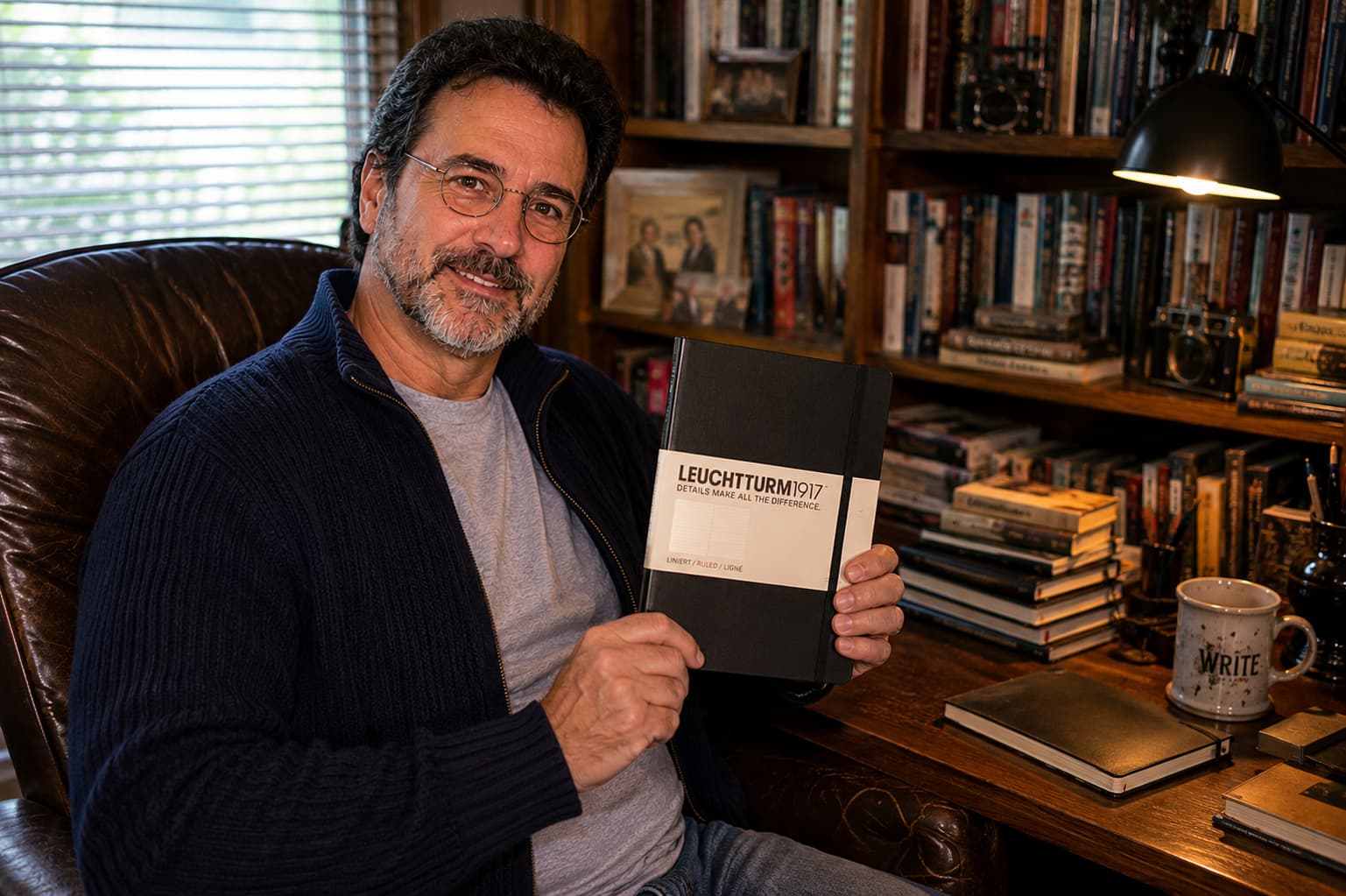
The Leuchtturm1917 is a classic for a reason. It has numbered pages, an index page, and two ribbon bookmarks. The paper is good enough for most pens, though heavy ink users might see some ghosting. It lies flat when open, which is more important than you might think. I have filled several of these over the years, and they remain my go-to for long-form writing and project notes.
Moleskine notebooks are famous, but I have mixed feelings. The paper in older editions was better. Current Moleskine paper tends to feather with wet fountain pens. That said, if you use a ballpoint or a fine gel pen like the Pilot G2, Moleskine works fine and the brand's cultural cachet is real. I still carry one sometimes for quick grocery lists or phone messages, but I do not use it for serious writing.
For something more portable, Field Notes are excellent. They are small, affordable, and come in many cover designs. The paper is not fountain pen friendly, but for a ballpoint or pencil, they are perfect. I keep one in my coat pocket at all times. They feel like a tool, not a luxury item, and that is exactly right for daily capture.
If you want a Japanese aesthetic and incredible paper, the Hobonichi Techo is hard to beat. It is a dated planner, but many writers use it as a daily journal because the Tomoe River Paper is so satisfying. The book lies completely flat, and the thin pages allow for a surprisingly high page count in a slim volume. I have used the Hobonichi Techo for morning pages and found the experience meditative.
The Traveler's Notebook system is another favorite. It uses a leather cover that holds multiple inserts. You can swap out inserts for different purposes: one for daily journaling, another for sketches, a third for travel notes. The paper quality varies by insert, but the standard blank insert uses a decent fountain pen friendly paper. I have been using a Traveler's Notebook for three years now, and the flexibility is unmatched.
Rhodia pads and notebooks are also worth mentioning. They come in wirebound or stapled forms, and the paper is consistently excellent. The orange covers are iconic. I use a Rhodia No. 16 for brainstorming and first drafts. It is affordable enough that I do not worry about wasting pages, and the paper handles my Lamy Safari and Pilot G2 without any issues.
Baron Fig notebooks have a minimalist design and good paper. They are based in New York and focus on clean layouts. I have used their flagship hardcover for a travel journal and liked the rounded corners and lay-flat binding. The paper is not Tomoe River, but it is better than Moleskine and works with most pens.
For those who prefer a more rugged option, consider the Dingbats notebook. It has a vegan leather cover, a pen loop, and an elastic closure. The paper is thick and handles ink well. I have taken a Dingbats on a hiking trip and it survived rain and dirt without falling apart.
Archer & Olive offers beautiful hardcover notebooks with thick 100 gsm paper. They are great for heavy ink users and mixed media. If you like to write with a fountain pen on one side and paint on the other, Archer & Olive can take it. The pages are perforated for easy removal, though I rarely tear them out.
Muji notebooks are a budget-friendly option that punches above its price. They are simple, plain, and the paper is surprisingly good. I have used Muji notebooks for lecture notes and daily logging. They are not fancy, but they get the job done.
Paperblanks and Peter Pauper Press offer decorative covers and good paper. They make for nice gifts or for writers who want their journal to look as good as it writes. I have a Paperblanks journal that I use for dream logging, and the ornate cover makes me smile every time I pick it up.
Exacompta is a French brand that makes affordable notebooks with excellent paper. They are not as well known as Rhodia or Clairfontaine, but they are part of the same family. The paper is smooth and fountain pen friendly. I keep one in my desk drawer for random thoughts.
Nanami Paper is a small company that produces notebooks using Tomoe River Paper. Their Cafe Note is a favorite among fountain pen enthusiasts. It is thin, light, and the paper is a dream. I use a Nanami Paper notebook for my daily journal and have never had a bleed-through issue.
If you want to go digital but still keep a physical feel, the Rocketbook is a reusable notebook. You write with a special pen and then wipe the pages clean with a damp cloth. The app scans your pages to the cloud. I have used one for meeting notes and it works well, though it does not replace the tactile pleasure of good paper.
Carson Dellosa is a brand you might not expect on this list, but their composition notebooks are surprisingly good for the price. They are not fancy, but they are durable and the paper handles pencil and ballpoint well. I used one for a NaNoWriMo project and it held up fine.
How to Choose Your Daily Companion
My best daily journal recommendations come down to matching the notebook to your tools and habits. If you use a fountain pen, skip Moleskine and go for Leuchtturm1917, Rhodia, or anything with Tomoe River Paper. If you use a ballpoint or pencil, almost any notebook will work, so focus on size and design.
Consider how you write. Do you write in short bursts throughout the day? A Field Notes or Traveler's Notebook insert might work best. Do you write long entries at a desk? A hardcover Leuchtturm1917 or Archer & Olive gives you room to spread out. Do you carry your journal everywhere? Look for something slim and light like the Hobonichi Techo or a Nanami Paper notebook.
Also think about the cover. Softcover notebooks are lighter and more flexible, but they wear faster. Hardcover notebooks protect the pages better but add weight. I use a softcover for my pocket notebook and a hardcover for my main journal.
Finally, consider the ruling. Lined paper is standard, but dot grid offers structure without being as restrictive. I prefer dot grid for daily journaling because it allows for diagrams and doodles. Blank paper gives you total freedom but can be hard to write straight on.
A Few Practical Tips
Do not feel pressured to fill every page. A journal with empty pages is not a failure. It is a record of what you chose to record. I have notebooks with gaps of weeks, and I still consider them valuable.

Use a pen that you enjoy holding. The Lamy Safari and Pilot G2 are both excellent choices. The Lamy Safari has a comfortable grip and interchangeable nibs, while the Pilot G2 is smooth and reliable. A good pen makes writing more pleasant and encourages consistency.
Store your journal in a consistent place. I keep mine on my nightstand. When I wake up, I write for ten minutes before checking my phone. That simple habit has kept me writing daily for years.
Final Thoughts
I have tried dozens of notebooks, and I keep coming back to the ones that disappear in my hand. That is the real test: a journal that does not get in the way. These daily journal recommendations are meant to help you find that same feeling. Whether you choose a Leuchtturm1917, a Hobonichi Techo, or a simple Muji notebook, the important thing is to start writing and keep going.
Remember, the best journal is the one you use. Everything else is just paper.